Corporate Olympians for Innopreneurship
Emeritus Professor KC Chan, DLitt., Founder of Wholistic Institute of Lifelong Learning (WILL)
Dr Julia Elizabeth Lim, Co-Founder, Wholistic Institute of Lifelong Learning (WILL)
Date: 17 December 2025
Abbreviations
BANI – Brittle, Anxiety, Non-Linear, Incomprehensible
VUCA – Volatile, Uncertain, Complex, Ambiguous
MBOSS – Management By Olympic System for Success
ALPS® – Action Learning Plus for Success®
Definitions
Innopreneurship – a combination of management, leadership and entrepreneurial skills with innovation, to create and capture new value of goods and services for impact and sustainability
Stratepreneurship – an entrepreneur who thinks in terms of long-term strategy in growing the art and science of business innovation
Introduction
Olympians set world-class performance standards on the sports field. Similarly, in the most admired companies and CEOs in the world (Fortune Magazine), Corporate Olympians set the benchmark in the business battlefield, There is a strong need for corporate athletes [1] to stay competitive and resilient in the BANI (Brittle, Anxiety, Non-linear, Incomprehensible) ecosystem, coupled to the VUCA (Volatile, Uncertain, Complex, Ambiguous) global business environment.
The authors have developed a structured approach to Management By Olympic System for Success (MBOSS), founded on the Olympic values of winning, not just through vigorous practice, but also through the 7S principles of being happy, healthy and harmonious, while developing better habits and the heart to help others. This comes with a sense of humility for fair and honest competition. MBOSS explains the concepts, paradigms, processes, and strategies of severe business competition in the 21st century. We are at the crossroads of digital business transformation in the era of AI. Change is constant, evolving, dynamic, and nonlinear.
This article shows how Corporate Olympians can succeed under the current brutal, adverse political, economic and social environmental ecosystem [2]. These Corporate Olympians have an underlying spirit of:
“Dare to Dream. Dare to Do. Dare to make the Difference.”
“Corporate Olympians to Excel”, pivots on the 6As of holistic thinking by putting the pieces together, i.e., integrating theory and practice to bridge the knowing-and-doing gap. The goal is to create a common language for successful implementation of MBOSS innovation culture:
Awareness
The concepts, competences, connections and changes required to transform an individual from a corporate athlete into the character of a Corporate Olympian through innopreneurship
Alignment
Why it is vital to develop and nurture a pipeline of Corporate Olympians to stay relevant and resilient. This requires innovation strategy via projects. Innovation projects are the common source of competitive advantage. The process is innopreneurship that works.
Action
How to implement MBOSS through ALPS® (Action Learning Plus for Success®) to ride the waves of competition, by carrying out incremental and iterative innovation projects to combat the constant and sudden changes in the global ecosystem. The right action enables the move from crisis to turnaround strategy. The atomic habit [3, 4] of action learning expedites bridging of the knowing-and-doing gap for speed and first to market schedule advantage.
Adoption
The characteristics of management, leadership, entrepreneurship, innopreneurship, and stratepreneurship are interdependent, inextricably linked, and inseparable (Figure 1), like the nose (smell), eyes (sight), mouth (touch), ears (sound) and tongue (taste) of the same body. The often-missing element is common-sense (whole brain thinking). For capability maturity, the spirit of Corporate Olympians must permeate the whole organisation. Everybody must go for peak performance, i.e., high-performance innovation culture [5, 6].
Assurance
Values (what we believe)
Mission (what we are now)
Vision (what we want to be)
are translated for paradigm shift into:
Principles (why we do what we do)
Practices (what makes us effective)
Promises (how will we work together) for paradigm shift [7].
To thrive and strive for continuous innovation in the era of AI, we need to change the way we think, work, behave, and perform.
Anticipation
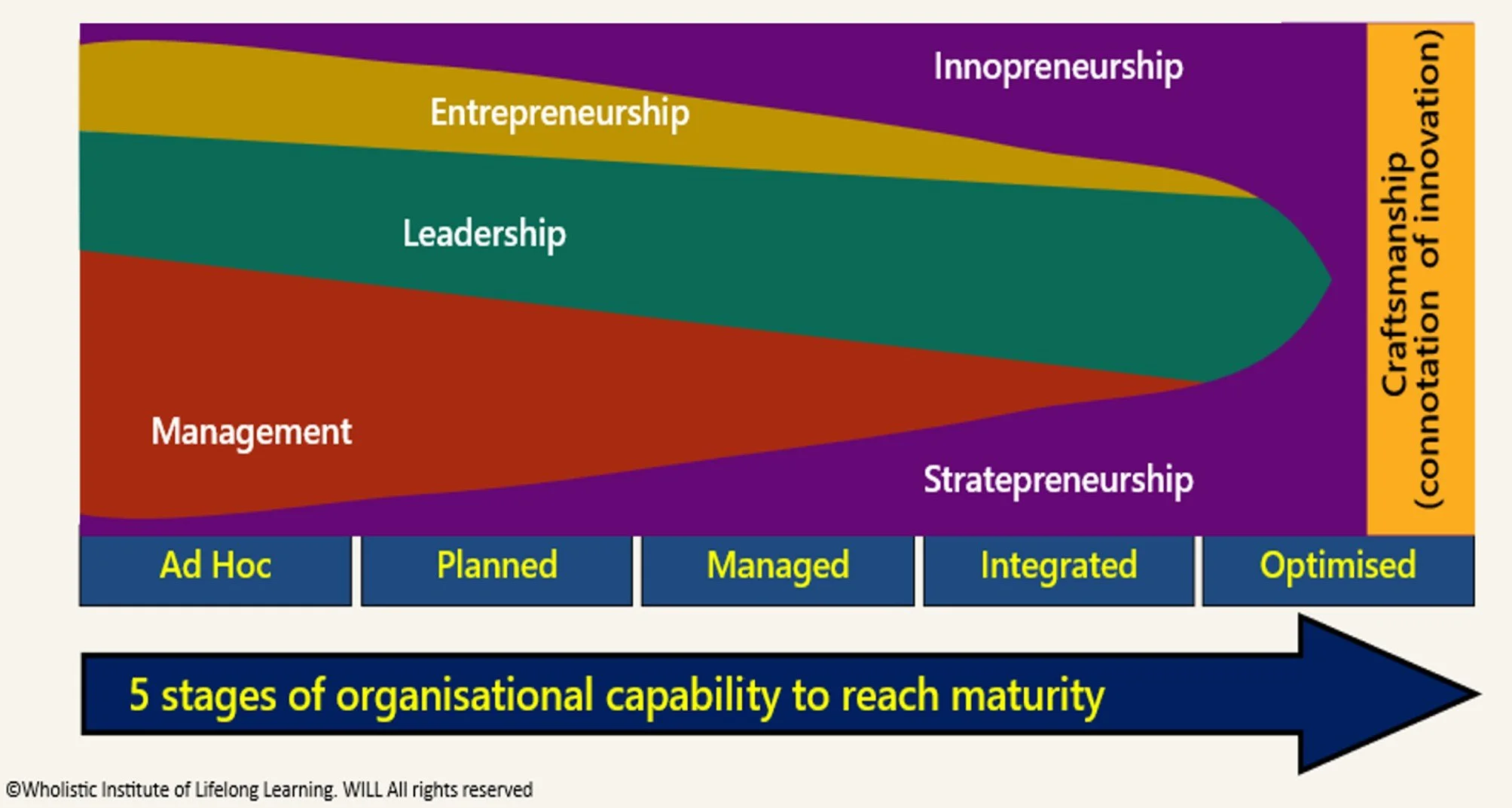
Figure 1: Management, Leadership, Entrepreneurship, Innopreneurship and Stratepreneurship are inseparable
Assumptions equal risks. The journey to build and nurture Corporate Olympians begins with developing individual competence and project team capacity, so that they can collectively and synergistically build organisational capability. This does not happen instantly. It takes five stages of transition change management – ad hoc, planned, managed, integrated, optimised.
There must be concerted efforts of organisational development for planned change to reach maturity peak performance – supreme execution capability. Not everyone can be developed and nurtured to transform into a Corporate Olympian. The risk response plan is to develop and nurture a pipeline of competent managers, effective leaders, professional entrepreneurs, agile innovators and proficient strategists who are whole brain thinkers [8]. This is to ensure that the organisation has the capability to perform, in quest of excellence in execution to win [9]. And ultimately attain the innovation culture of high-performance (Way Of Working, aka WOW effect) to beat the competition [10,11]. Everyone is responsible and accountable for innovation by inculcating innopreneurship as a common language for continual improvements.
A company needs a unique core competence that is deeply rooted in values (what we believe in). Values drive behaviours. Behaviours drive performance. Growth competence is the scalability of its uniqueness, leveraging on continual innovations for better practices. This drives the mission of a company (what we are now) to reach its vision (what we want to be). Human resources progress from human capital to human capability, and ultimately to human champions of a superefficient company [12, 13]. Organisations that adopt MBOSS and ALPS® principles will be able to transform, adapt and cushion sudden VUCA business environmental changes. Being ever-ready to change is essential, as there will inevitably be unpredictable cum unprecedented challenges in globalisation of markets and products, bombarded by unknown-unknown risks.
Distinct competence is necessary for brand leadership – the promise of a high-performance innovation culture, with supreme execution capability which is hard-to-emulate for competitors. It is a long-haul process, and every member of staff needs to make concerted efforts to work in tandem at the right pace to minimise turnover of talented and key members of staff. The passage to develop and nurture Corporate Olympians pivots on the spirit of an Olympian in the corporate world through human resources. Then human resources transform into human champions. Only the best of the best can qualify as Corporate Olympians – global human champions, just as in an Olympic race [14, 15, 16] – playing to win as individual, team, nation.
It is imperative to note that an organisation reaches peak of its capability maturity over five stages of change – ad hoc, planned, managed, integrated, and finally optimised performance. The speed of transformation must work in tandem with a coherent strategy for momentum (strengths x speed x strategy). This will enhance management, leadership, entrepreneurship, innopreneurship and stratepreneurship. All the while it is important to bear in mind innovation. Management and entrepreneurship will play a less significant role towards maturity stage.
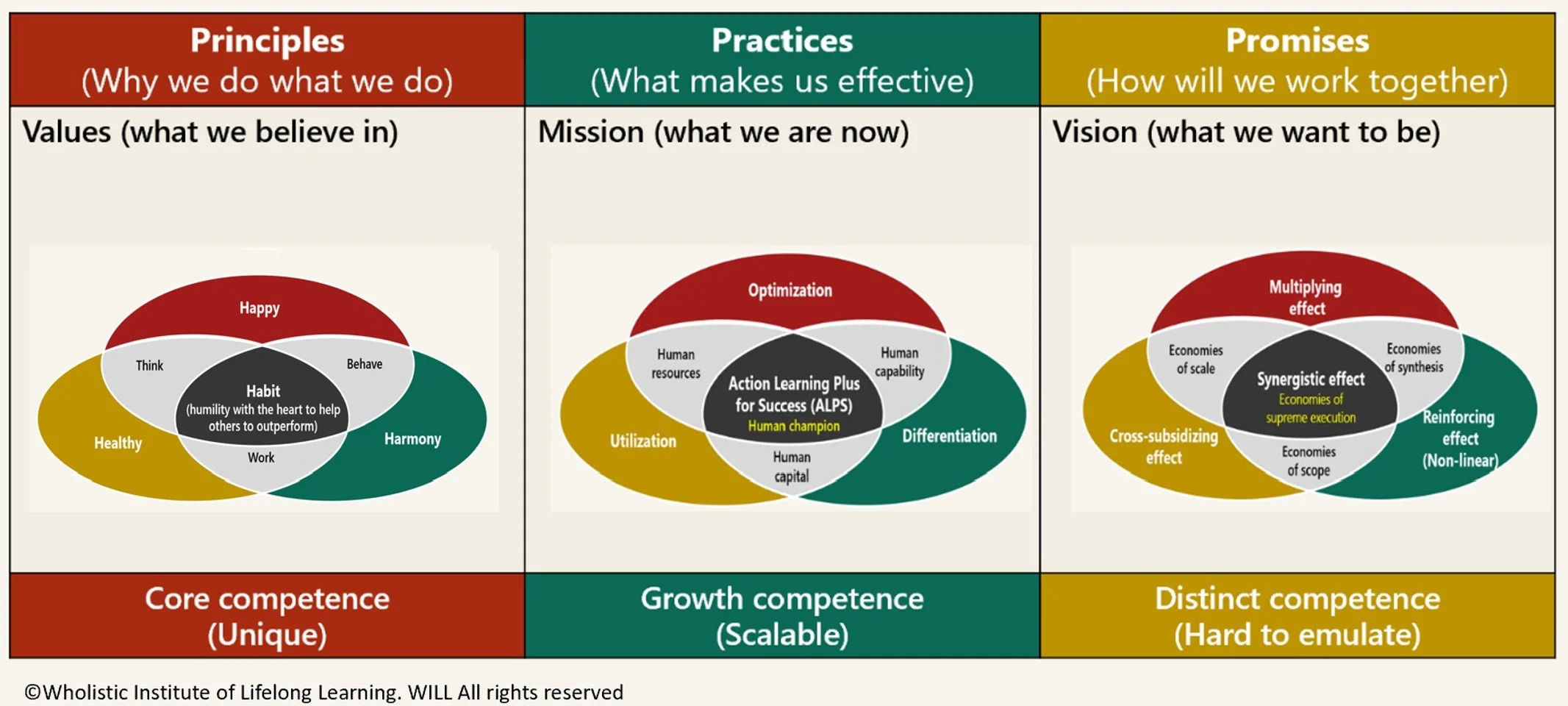
Figure 2: Principles, Practices, and Promises of Corporate Olympians aka Human Champions
The principles, practices, and promises (3Ps) of Corporate Olympians are applicable to all three types of organisations – small, medium and large. The 3Ps (Figure 2) are generic values that embrace happiness and health by staying in harmony with key stakeholders. Corporate Olympians keep a mindset that nurtures positive habits and an abundance mentality, driven by humility, and the heart to help others to outperform [17, 18, 19].
The first and crucial step to implement the paradigm shift is to change the way we think (most vital), before we can change the way we work, behave, and perform. To keep the company nimble and lean, overheads must be kept to a minimum [20, 21] – Figure 3.
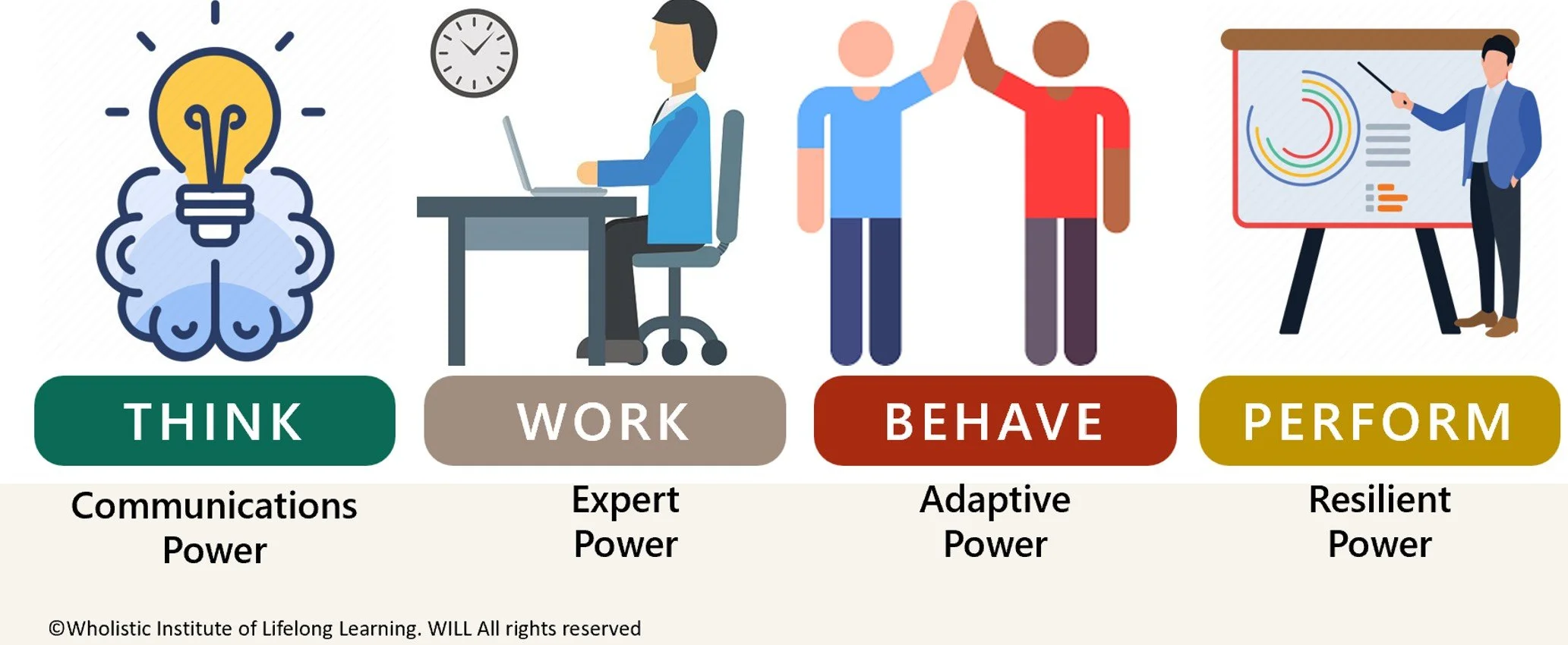
Figure 3: Paradigm Shift to Change the Way We Think, Work, Behave, and Perform to Achieve 4 Types of Power to Transform from Brand Leadership (Product) to Leadership Brand (person)
The best practice of optimisation of critical 6Ms resources (money, manpower, machines, materials, methods, minutes) is to achieve highest total productivity. This means using facilities – both internal (own resources) and external (contractors’ resources). It is important to identify where there is lead (spare capacity), lag (insufficient capacity) or blended. Where there is lag, tasks can be outsourced to make the best use of all available resources. It is essential to combine use of capacity with optimisation of resources to gain competitive advantage - cost effectiveness. This means quality versus cost, speed of delivery and flexibility.
The final measurement is differentiation. From the lens of the customer, this means best cost (cost leadership) and value for money (value innovation). The essence of transforming human resources into human champions is to develop whole-brain managers, leaders, entrepreneurs, innovators/ innopreneurs and stratepreneurs [22]. All of these must leverage on the heart of innovation [23] to excel and supersede competitors. ALPS® is a pragmatic model to achieve this – with the ultimate objective of leveraging it into intellectual property when the timing is right. To win, we need both brand leadership (product) and leadership brand (person).
Whole-brain human champions need to apply the multiplying effect of:
Economies of scale for standardisation to achieve lowest cost.
Economies of scope from cross-subsidising for mass customisation to cater for local and regional markets.
Economies of synthesis can reinforce supplies in the business value chain to attain the lowest unit cost of production.
These three drivers have a synergistic effect – economies of supreme execution of a coherent strategy – faster, better, smarter (to stay afloat and outperform competitors via numerous innovation projects of highest business value and lowest risks). The business value chain effect ensures that stakeholders in the supply chain win - higher profitability due to total productivity of resources [24]. Ultimately it must be a win-win outcome for all stakeholders.
There are steps to be taken before inculcating and nurturing the spirit of Corporate Olympian, measuring every individual’s competence. Important measures are:
Intellectual capital – education and qualifications
Emotional capital – adept in managing people, process and planet/ AI-technology
Social capital – networking with internal and external stakeholders to influence and garner support to gain consensus.
Adversity capital – resilience power, stress management and the ability to turn threats into opportunities amid hardship
How long the human capital stays in the role will depend on the individual’s adversity capital. Factors affecting this are:
Who the employer is – brand leadership.
Whether the individual is offered a better job. In this case four capitals are brought into play (intellectual, emotional, social, and adversity). The individual must weigh up the risk versus the opportunities.
Regardless of whether the individual decides to leave or stay, it is essential to enhance the competence of an individual, as well as the capacity of project teams. This enriches what everyone does, i.e. what I do gets the job done through empowerment [25, 26].
Future skills need to incorporate four types of thinking skills – unified by Wholistic thinking:
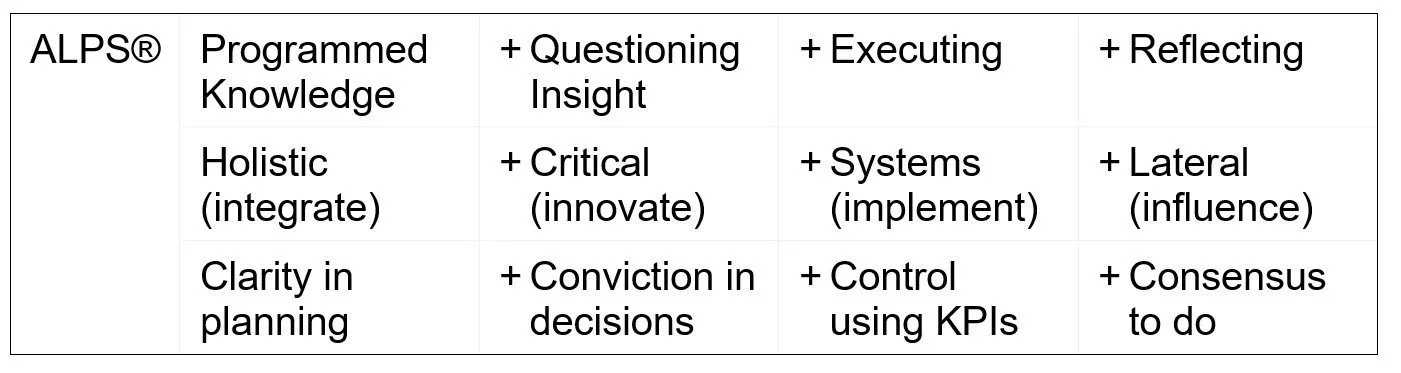
Holistic thinking for ability to integrate to achieve clarity in planning through facilitation workshops.
Systems thinking for ability to implement effective policies that monitor people and control processes, using Key Performance Indicators (KPIs) for planet of projects.
Critical thinking for ability in effective decision-making to achieve highest business value and lowest risks. This applies to different business cases. The criterion is win-win for stakeholder value management – what’s in it for me.
Lateral thinking for empathy analysis to achieve consensus with minimum resistance. This brings impactful synergy through the power of influence without authority.
Whole-brain aka Wholistic thinking is not piecemeal, but a total approach to complex problem solving. It consists of a repertoire of innovation tools. The outcome is whole-brain learning via ALPS® pivoting on project-based accelerated action learning (PBAAL). Another way of saying this is by the equation:
ALPS® > rate of change in the macro-VUCA global competition and micro-BANI ecosystem
In the Olympic competition, not everyone can be a champion. It is only the best three – winner and two runners-up. However, all Olympic competitors are world-class athletes.
Those who reach the quarterfinal are human capital.
Those who reach the semifinal are human capability.
Those who reach the final round are Corporate Olympians.
This is not based on seniority, but on who makes a significant contribution to the company, for example by tangible or intangible benefits - value innovation [27].
The authors have identified four types of power that emanate from the four types of capital, to soar to greater heights as the organisation matures, viz:
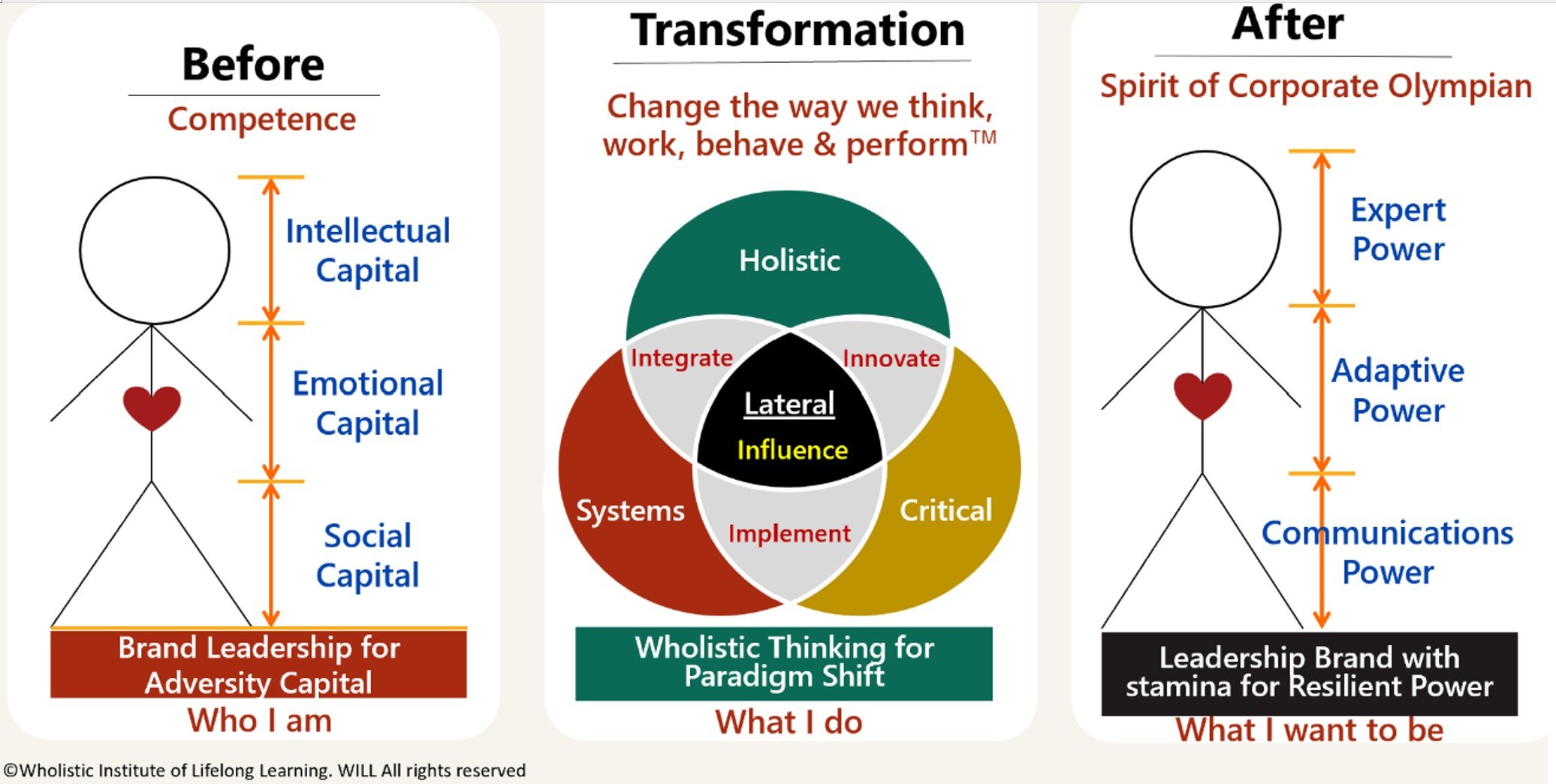
Figure 4: Process of Transformation
Communications power – to connect and influence stakeholders to transform them from non-supporters to supporters. This is to touch heart and soul by being “Supercommunicators” to convert non-consumers to consumers. 90% of the leadership role is to ascertain how to unlock the secret language of connection [28].
Expert power – dollar value attached to commercial worth, expressed in renumeration. Generally, this is an individual expert with a wealth of knowledge and experience – a generalist-specialist. Examples are world-class management consultants, transformational leadership coaches, specialist professionals, pracademics, etc., who are classified as talents.
Adaptive power – ability of an individual to work across borders. This means being flexible and versatile in multitasking roles, adaptable, embracing cultural diversity, communicating in a way to win the hearts and minds of key stakeholders in the workplace. This brings win-win benefits and outstanding impact on business innovation.
Resilient power – stamina and ability to persevere, i.e., built to last. This warrants adaptive / agile planning in the long-term (over 10 years), mid-term (up to 6 years), and short-term (up to 3 years) [29, 30]. For individuals, it is career planning. For business it is product lifecycle planning. For organisations it is strategic investment planning – Figure 4.
In the crossroad of digital business transformation and era of AI, the essence of a fusion strategy [31] is central to unlocking value creation through innovation projects that transform people, process and planet holistically – with strategic, total, open and collaborative endeavour [32]. To succeed in this, we need human capital, human capability, human champions, and Corporate Olympians who have unified characteristics of leadership, entrepreneurship, innopreneurship, and stratepreneurship. They need to use an innovation and environmental management system balanced scorecard for monitoring and controlling of sustainability (ISO56001 and ISO14064).
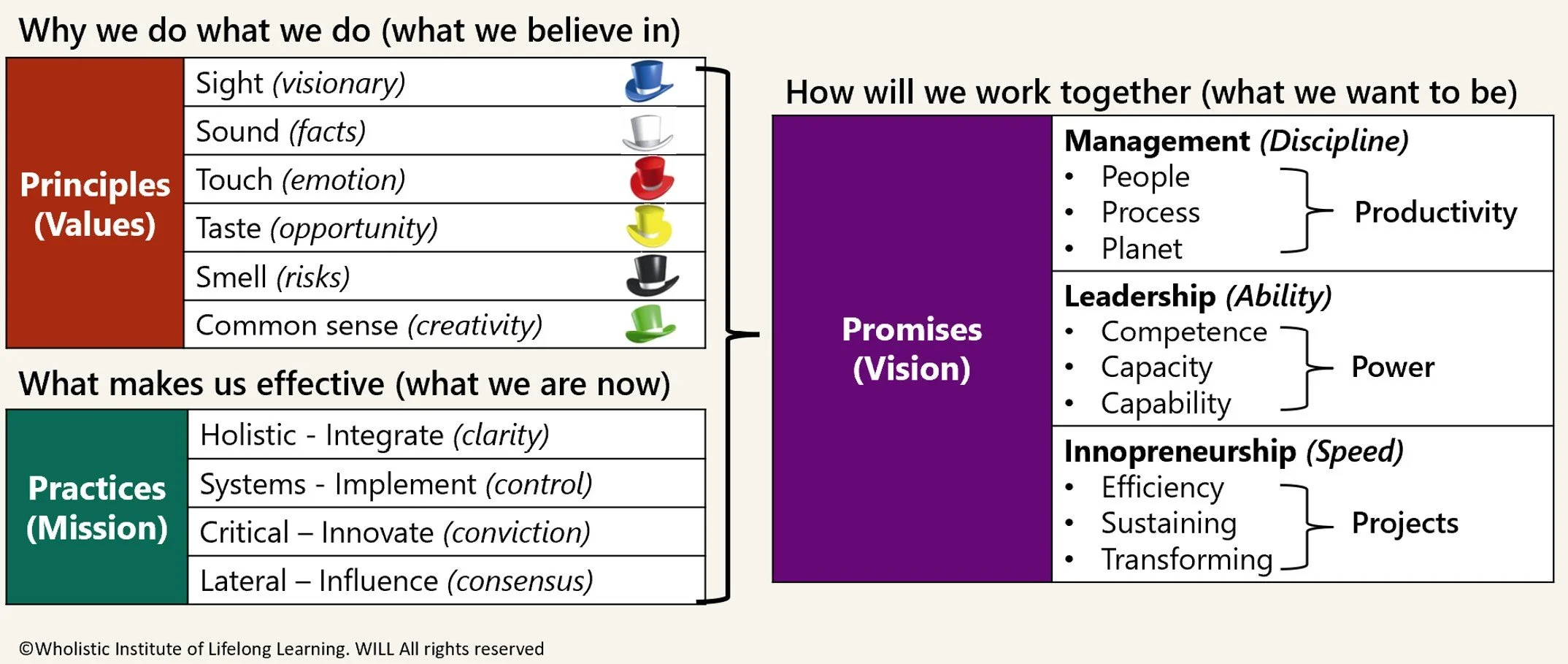
Figure 5: Overview of Corporate Olympians for Innopreneurship
Combining the six senses of design thinking [33] and lateral thinking, using six thinking hats [34, 35], are incorporated in the principles to create the pieces as a result of empathy analysis. This is to gain consensus focusing on customer-centric strategy which stretched across the organisation. It is also everyone responsibility to ensure customer retention for repeat order is accomplished. Customer is the one who pay for our salaries. Key account customers are the ones who help us grow and prosper. Synomously, winning the Olympic race is the mindset of every country’s citizens to do their best in fair and honest competition – Figure 5.
There is no best way but always a better way [36, 37]. To win in the Olympics, where practice makes perfect, it is vital that the right people are developed using the right process, and equipped with the right planet. The result is people discipline in execution, process ability in execution, and planet speed in execution. We bet on people, not strategy [38]. It’s people who implement the strategy via innovation projects (continuous improvement for better practice). Thus, clarity, control, conviction and consensus are the key success factors to horne industry Olympic best practice. Make efficiency (routine innovation), sustaining (disruptive innovation), transforming (radical innovation), and breakthrough Olympic innovation projects the school for developing and instilling management, leadership, entrepreneurship and innopreneurship, all guided by stratepreneurship. There can be no learning without action, and no action without learning [39]. The heart of innovation to improve continuously [40, 41] is embedded in the ALPS® equation viz.
To conclude, the performance of the most admired companies in the world is outstanding because of their supreme execution ability to implement coherent strategies. This is the result of discipline and better management of people, process and planet to achieve purpose of total productivity with critical resources. The three echelons of leadership (strategic, business, and operations) attribute their ability in execution to the collective synergy of individual competence, project team capacity, and organisational capability. Unified by communications, expert, adaptive and stamina power to stay resilient and build to last will stand them in good stead to soar to greater heights. Similarly, McKinsey labelled it as Innovation Olympics [42].
Innopreneurship is everyone’s business in the spirit of Olympians, who learn fast and fail fast, but improve continuously in bite-sized steps. ISO 56001 can be incorporated into MBOSS.
The process of transforming from corporate athlete to corporate elite, talents, and champions can be speeded up through project-based accelerated action learning (PBAAL) with ALPS®, by implementing efficiency, sustaining, transforming, and finding breakthrough innovation projects. The corporate athlete management system to enable the transformation is MBOSS.
To be sure, everyone needs first to change the way we think.
Lateral thinking: creating the new pieces by solving problems from a different perspective. Looking at it from diverse angles.
Holistic thinking: putting the pieces together to form a pattern.
Systems thinking: putting the right pieces in the right places at the right time, and at the right place for strategic, business, and operational fit.
Critical thinking: removing the obsolete/redundant pieces and replace with new/improved ones so that the system remains relevant, sustainable, and keep abreast with the trend.
Contact us to explore how WILL’s proven Corporate Olympian development solutions can help you navigate transitions with confidence and drive long-term success.